Aging White Tea:
A Beginner's Guide
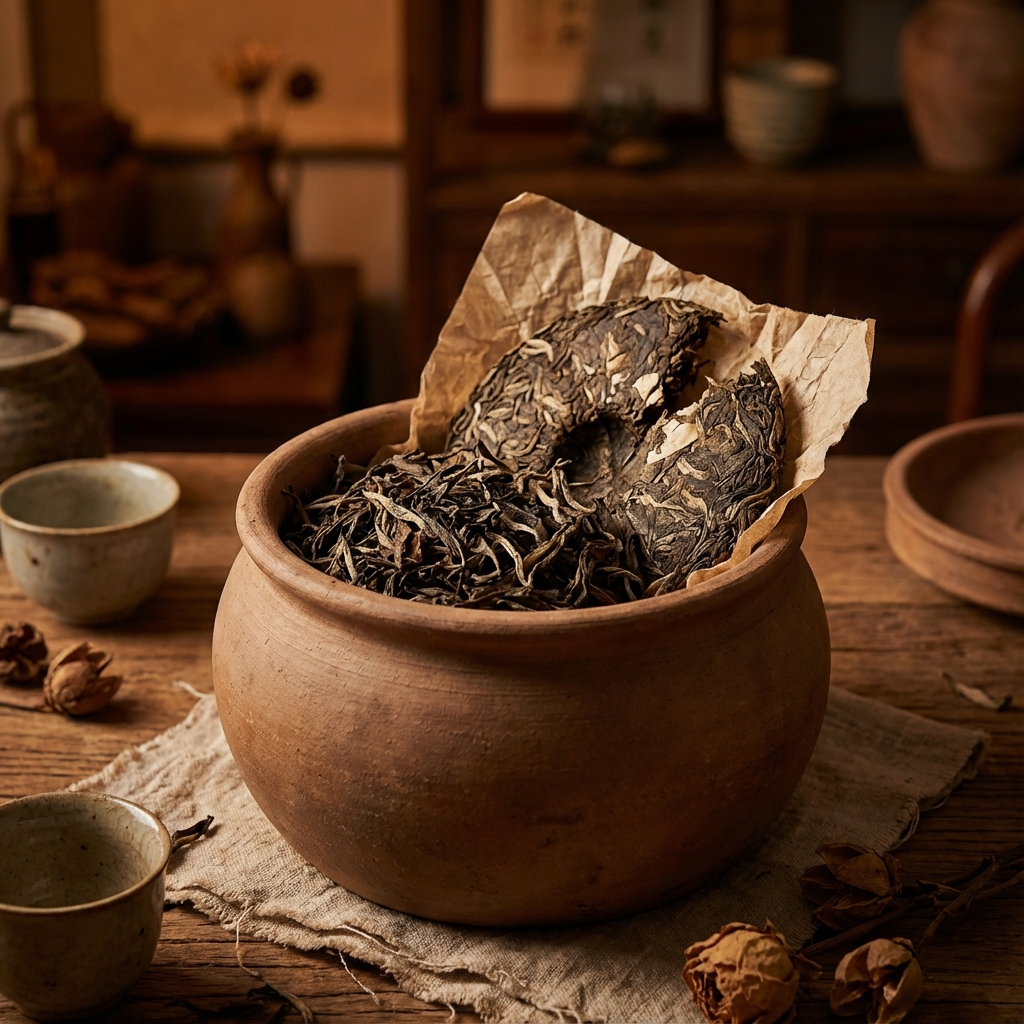
"One year tea, three years medicine, seven years treasure." — Old Chinese Proverb
While pu-erh is the most famous aged tea, white tea has emerged as a darling of the collecting world. Unlike green tea, which is best consumed fresh, white tea possesses the unique ability to transform over time. The same leaves that taste like fresh hay and flowers today can taste like dates, honey, and medicinal herbs five years from now. This alchemical process happens silently in the cupboard, turning simple leaves into gold.
Why Does White Tea Age?
The secret lies in the processing constants. Because white tea enzymes are not deactivated by high heat ("kill green" step), they remain dormant but alive within the leaf. Over time, slow enzymatic oxidation and slight fermentation occur. This changes the chemical profile: catechins break down into flavanoids, chlorophyll fades, and new aromatic compounds are synthesized.
The Three Stages of Aging
White tea aging is often mapped out in three distinct phases, each offering a unique drinking experience.
- Year 1-2 (The "Tea" Stage): The tea is fresh, vibrant, and cooling. The dominant notes are sun-dried hay, fresh honeysuckle, and soy milk. The liquor is a pale, glimmering yellow. It is rich in active antioxidants and amino acids, providing a refreshing energy.
- Year 3-6 (The "Medicine" Stage): The tea settles. The grassy "new" texture disappears. Flavors become warmer and mellower—think apricot jam, dried straw, and wafers. The liquor deepens to an amber-orange. This transitional tea is considered warming for the stomach.
- Year 7+ (The "Treasure" Stage): A profound transformation. The tea develops a rich "date fragrance" (zao xiang) and "medicinal aroma" (yao xiang). Notes of old wood, dried berries, dark honey, and even lotus leaf emerge. The color is a deep, translucent orange-red. It is incredibly smooth, with zero astringency.
Best Varieties for Aging
While Silver Needle can be aged into a deeper, honey-like version of itself, the true champion of aging is Shou Mei (Longevity Eyebrow).
Why? Because Shou Mei consists of coarser, more mature leaves and stems. These stems are packed with sugars and pectin, which provide the "fuel" for the long-term fermentation process. A 10-year-old Silver Needle is rare and expensive; a 10-year-old Shou Mei cake is a classic that tastes like sweet jujube tea.
Storage: The Golden Rules
Aging tea isn't just about waiting; it's about active protection. If you store it wrong, you get moldy hay. Store it right, you get treasure.
1. Sealed but breathable
Unlike pu-erh which needs airflow, white tea prefers a slightly more sealed environment (micro-oxidation). The industry standard is the "Three Layer Method":
1. Aluminum foil bag (inner).
2. Food-grade plastic bag (middle).
3. Cardboard box (outer).
For home aging, keeping the pressed cake in its original paper inside a cardboard box or a ceramic jar (not airtight) works well. Avoid Ziploc bags for long term; they can impart plastic smells.
2. The Environment
Humidity: This is critical. Aim for 50-70% Relative Humidity. Too dry (>40%), and the aging stops. Too wet (>70%), and you risk mold. If you live in a dry climate, you may need a humidor box.
Temperature: Room temperature (20-25°C) is ideal. Stability is key.
Odor-free: Tea is a sponge. Never store tea in the kitchen (grease/spices), near coffee, or in a cedar closet. It will absorb those smells forever.
Conclusion
Starting a white tea collection is a journey in patience. Buy a tong (stack) of Shou Mei cakes today for a low price, drink one now, and hide the rest. Revisit them every year. Tasting the passage of time in your own cup is one of the distinct joys of the tea lifestyle.
Further Reading
If you enjoyed this guide, you might also like our other articles: