Silver Needle vs. White Peony:
A Tasting Comparison
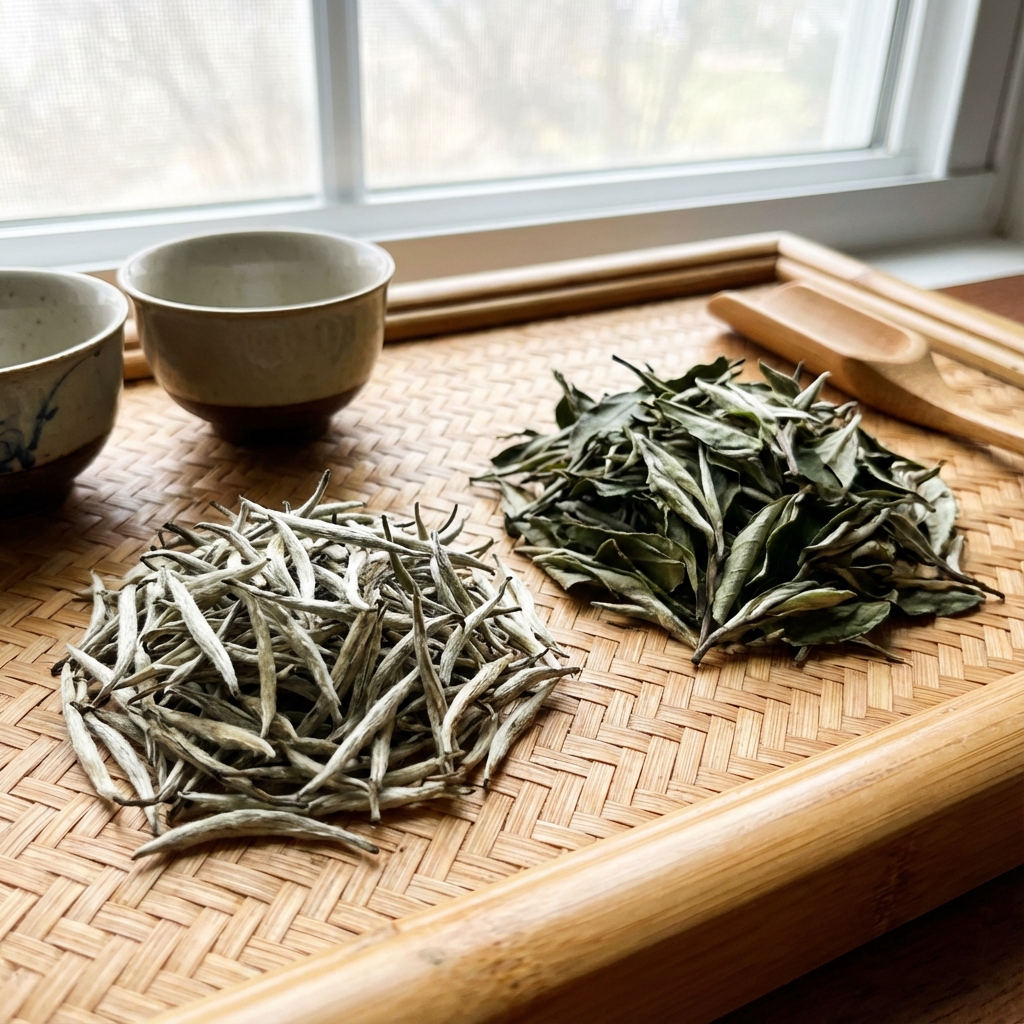
"To know white tea is to understand the subtle dance between the bud and the leaf. Silver Needle is the whisper; White Peony is the song."
When stepping into the world of white tea, two names dominate the conversation: Silver Needle (Baihao Yinzhen) and White Peony (Bai Mudan). Both originating from the misty mountains of Fuding in Fujian Province, they share a heritage but offer distinctly different experiences in the cup. Understanding these differences is key to appreciating the full spectrum of white tea.
Origins and Grading: The Bud vs. The Leaf
The fundamental difference between these two teas lies in the plucking standard. Silver Needle is the "emperor" of white teas. It embodies exclusivity, harvested only for a few days in early spring. Pluckers select only the single, fat, unopened bud of the tea plant. These buds are covered in a dense coat of silvery-white down (pekoe), which protects the young shoot from cold mountain air and intense sunlight. This pekoe is responsible for surface glimmer and the rich, viscous texture of the tea.
White Peony, traditionally the second grade, is harvested slightly later. Its standard is "one bud, two leaves." This inclusion of young leaves significantly changes the chemistry. While the buds provide sweetness and texture (theanine), the leaves introduce more chlorophyll, polyphenols, and structure. The appearance is a wilder, beautiful mix of silvery buds nestled against sage-green and even autumnal-brown leaves, resembling a dried flower blossom.
Aroma: From Delicate to Floral
The brewing aroma sets the stage for the taste. Silver Needle offers a whisper of fragrance—delicate, clean, and subtly sweet. You might detect notes of fresh hay, honeysuckle, and a hint of morning dew. It demands your attention; if you rush, you might miss it. This is a tea of subtlety, often described as having a "milligrams" weight but "tons" of impact.
White Peony is far more extroverted. The inclusion of mature leaves adds depth, releasing a rich, robust floral bouquet often compared to gardenias or orchids. It has a warmer, nuttier undertone that fills the room more readily than its delicate cousin. You may find hints of melon, dried apricot, or even a light woodiness that isn't present in the pure bud tea.
Flavor Profile: The Tasting Journey
Silver Needle: The Essence of Purity
Brewing Silver Needle produces a pale, champagne-colored liquor, sometimes almost clear like water. Do not be deceived by the color. The texture is thick and viscous, coating the mouth with a smooth, savory sweetness often described as "soy milk" or "fresh corn" sweetness. It lacks astringency almost entirely. The flavor is subtle—hints of melon, vanilla, and sap—but the mouthfeel is luxurious. The aftertaste (hui gan) is long-lasting, turning sweet in the throat minutes after the sip.
White Peony: The Complex Character
White Peony yields a deeper, golden-apricot to light orange liquor. The flavor is bolder and fruitier, with notes of stone fruits (apricot, peach) and a distinct floral sweetness. Because of the leaves, it has more body and a very slight, pleasant astringency that adds structure to the tea, making it feel more "refreshing" to some palates. It lingers longer on the palate with a honey-like finish and stands up better if you accidentally over-steep it.
Brewing Guide: Unlocking the Best Flavor
Silver Needle Parameters
- Temperature: 85°C - 90°C (185°F - 194°F). Contrary to green tea, the fuzzy buds need higher heat to penetrate.
- Vessel: Glass tall glass is traditional (to see the "dancing" buds) or a white porcelain Gaiwan.
- Steep Time: 3-5 minutes western style, or 45s gongfu style.
White Peony Parameters
- Temperature: 85°C - 95°C (185°F - 203°F). Can handle near-boiling water well.
- Vessel: Porcelain Gaiwan or Yixing Clay Pot (dedicated to white tea).
- Steep Time: 2-3 minutes western style, or 20-30s gongfu style.
Food Pairings
Pair Silver Needle with foods that won't crush its delicate soul. Think unsalted nuts (almonds, macadamias), lighter white chocolates, or simple sponge cakes. It also pairs beautifully with fresh fruits like melon or pear. Avoid spicy or oily foods.
Pair White Peony with slightly richer snacks. It stands up well to shortbread cookies, fruit tarts, mild cheeses like Brie, or even dim sum dishes like shrimp dumplings (har gow). Its stronger backbone cuts through light oils effectively.
Conclusion: Which is for You?
Choose Silver Needle if you seek a meditative, subtle experience. It is a tea for moments of quiet, where you can focus on the texture and the lingering sweetness. It is the champagne of teas—refined, elegant, and prized.
Choose White Peony if you want a daily drinker with a fuller flavor and richer aroma. It is often considered the "coffee drinker's introduction to white tea" because it has more grip and presence. It offers the best of both worlds: the delicacy of the bud and the depth of the leaf.
Further Reading
If you enjoyed this comparison, you might also like our other articles: