The Science Behind
White Tea's Antioxidants
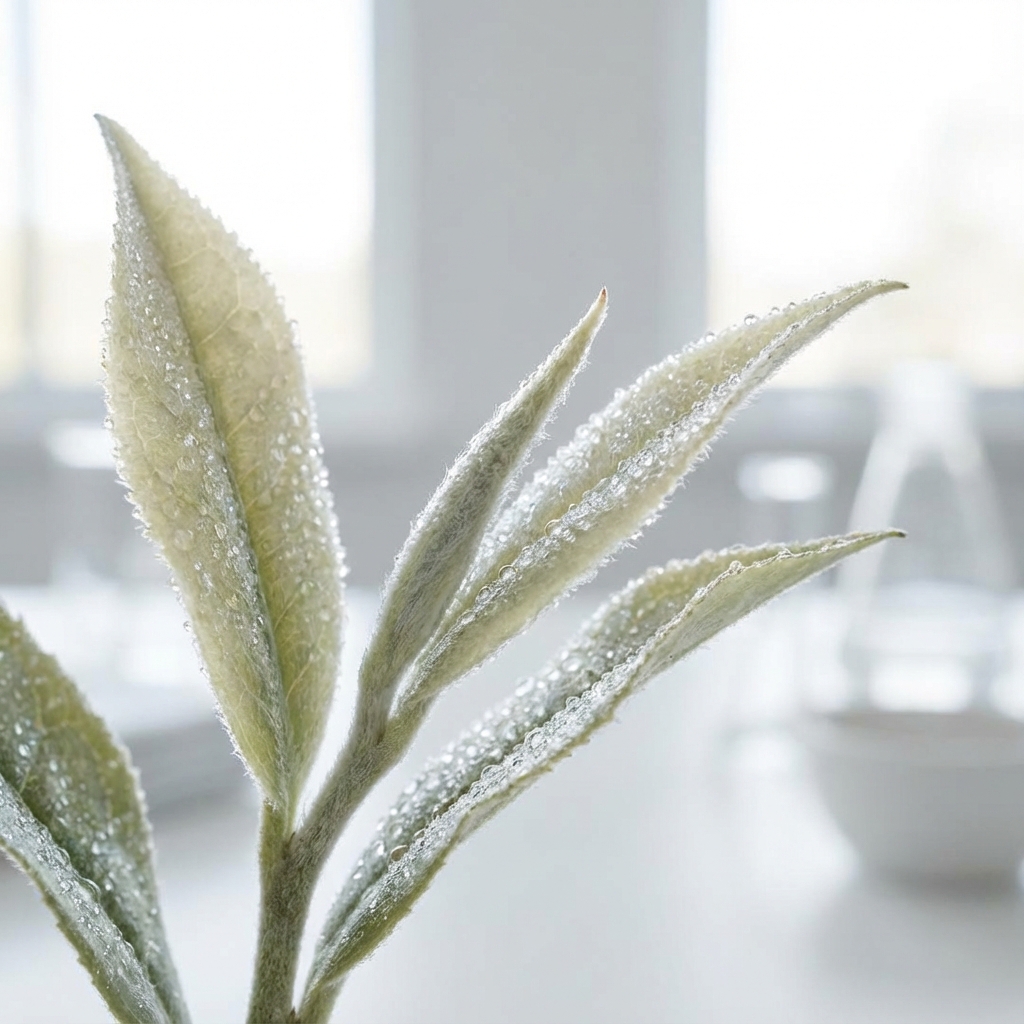
"Minimal processing means maximum potential. Why modern science is turning its gaze back to the simplest form of tea."
For centuries, Chinese medicine has revered white tea as a cooling, detoxifying elixir. Today, modern science is catching up, revealing that this delicate beverage might just be the most potent antioxidant powerhouse in the tea family. But what makes white tea chemically distinct from its green and black cousins?
The "Living" Leaf: Processing and Bioavailability
The secret lies in the processing—or rather, the lack of it. Green tea is "killed green" (steamed or pan-fried) at high heat to stop oxidation immediately. Black tea is intentionally bruised and fully oxidized. White tea is simply withered and dried. This gentle process is crucial.
Because white tea undergoes almost no heat treatment and only very light natural oxidation, the natural chemical structure of the fresh leaf is preserved. This means the delicate catechins—the plant's natural defense compounds—remain intact and abundant. While green tea is excellent, some studies suggest that the particular profile of polyphenols in white tea may offer structurally different benefits.
Polyphenols & EGCG: The Heavy Hitters
White tea is exceptionally rich in a group of antioxidants called polyphenols. Within this group, the star player is Epigallocatechin Gallate (EGCG). EGCG is a powerful free-radical scavenger. While green tea is famous for EGCG, young buds (like Silver Needle) are naturally packed with nutrients to support new growth, meaning white tea can rival or even exceed green tea in effective content depending on the harvest.
Comparative studies have been fascinating. A study conducted by the Sant Longowal Institute of Engineering and Technology found that white tea extracts exhibited higher antioxidant activity in certain assays compared to green tea. This capability involves neutralizing free radicals—unstable molecules that damage DNA and lipids, contributing to aging, inflammation, and chronic disease.
L-Theanine: The Calm Focus
Beyond antioxidants, white tea is a prime source of L-Theanine, an amino acid that crosses the blood-brain barrier. L-Theanine promotes alpha brain wave activity, which induces a state of "relaxed alertness."
Because white tea is made from shade-dried buds, the L-Theanine is preserved (sunlight converts theanine into catechins). This explains why white tea provides a smooth, jitter-free energy unlike coffee. Some analyses show white tea containing up to 6.26 mg/g to 11.5 mg per brewed cup, providing a significant calming effect to counterbalance the caffeine.
Skin Health & Anti-Aging: The Enzyme Blocker
One of the most exciting frontiers in white tea research is dermatology. A landmark study at Kingston University in London tested 21 different plant and herb extracts for their potential health benefits. White tea outperformed them all.
The study found that white tea had significantly high anti-collagenase and anti-elastase activity. Collagen and elastin are the structural proteins that keep skin firm, bouncy, and youthful. Over time, and with UV exposure, our body produces enzymes (collagenase and elastase) that break these proteins down, leading to wrinkles and sagging.
In plain English? White tea works to inhibit the enzymes that age your skin. While creams apply these benefits topically, drinking white tea works systemically from the inside out, potentially slowing the visible structural decline of the skin matrix.
Immune System Support
The minimal processing triggers a different kind of chemical retention. White tea retains antibacterial and antiviral properties. In traditional Chinese medicine, aged white tea (prescribed almost like medicine) is used to treat colds and fevers. Modern research supports this, indicating that white tea extracts can help the immune system fight off invaders more effectively than plain water or even other tea types in certain petri dish scenarios.
Conclusion
While green tea often grabs the headlines due to volume of marketing, white tea is the quiet achiever. Its delicate flavor belies a potent chemical profile. By drinking the least processed tea, you are getting as close as possible to consuming the living, healing properties of the Camellia sinensis plant itself—a pure, unfiltered connection to nature's pharmacy.
Further Reading
If you enjoyed this article, you might also like our other articles: