Visiting Fuding:
Birthplace of Silver Needle
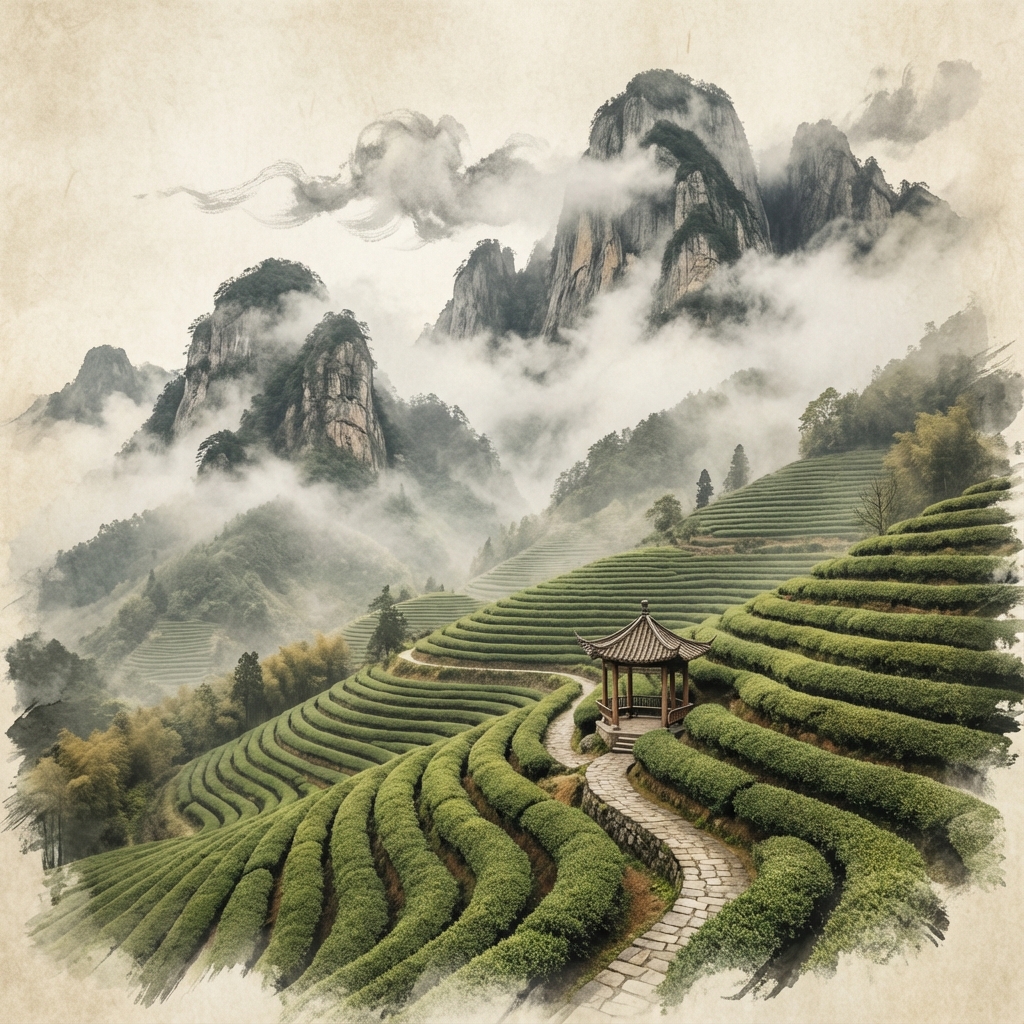
"In the mist of Taimu Mountain, the white tea bud sleeps until the spring sun wakes it up."
To understand white tea, you must understand Fuding. Located on the northeast coast of Fujian Province, this coastal city is the spiritual and historical home of white tea. For a tea lover, a pilgrimage here is not just a trip; it's a return to the source. It is here that the unique combination of maritime climate and mountainous terrain creates the perfect cradle for the Fuding Da Bai cultivar.
Getting There: The Journey
Fuding (In Fujian: "Hudin") is accessible but retains a remote charm. The typical route involves flying into Fuzhou Changle International Airport (FOC). From there, it is a high-speed train ride of about 1.5 hours north to Fuding Station.
As the train zips out of the tunnels, you'll see the landscape change. The humid subtropical air thickens, and the flatlands give way to the dramatic, jagged peaks of the coastal ranges.
The Magic of Taimu Mountain
The heart of Fuding white tea is Taimu Mountain (Taimushan). Rising dramatically from the sea, its granite peaks are perpetually shrouded in clouds and mist. This is a UNESCO World Geopark, but for us, it's a giant tea garden.
The microclimate here—high humidity, diffuse sunlight through the fog, and mineral-rich rocky soil—creates the phenomenon known as "high mountain energy" (shan yun). Legend says the "Great Grandmother of Tea" (Taimu Niangniang) discovered the first white tea bush here to cure a village plague. You can visit the Hongxue Cave where the original "Mother Bush" is said to still grow.
Yipianwa Temple
Deep in the mountains lies Yipianwa Temple, a Zen temple that seemingly floats between cliffs. It's famous for its copper hall, but more importantly, the monks here are tea masters. They actively cultivate small plots of tea on the cliff edges. Drinking tea here, with the sound of temple bells, and the view of the ocean of clouds below, is a spiritual experience that defines the essence of "Cha Dao" (The Way of Tea).
Spring Harvest: A Sea of Green
The best time to visit is late March to early April. The entire region hums with activity. The air smells of fresh vegetation and processing tea.
In the town of Dian Tou, the central tea market bustle starts before dawn. Farmers arrive with motorbikes loaded with sacks of fresh leaves—Silver Needle (all buds) and White Peony (bud and leaf). The sight is mesmerizing: thousands of kilos of fluffy, silver-green buds being haggled over, inspected, and sold. It is raw, loud, and incredibly fragrant.
The Art of "Sun-Withering"
Walking through the villages, you'll see large bamboo trays lined up in courtyards, on roofs, and even along the roadside. This is sun-withering, the most critical step in white tea making.
Unlike factory-produced teas, authentic Fuding white tea relies on the sun. Masters constantly monitor the light and wind, moving trays into the shade if the sun gets too harsh. It’s a delicate dance with nature that requires generations of intuition. Seeing the endless rows of trays drying under the Fujian sun is the iconic image of Fuding.
Travel Tips
- Local Eats: Try the Fuding meat slice soup (Rou Pian), a savory, spicy broth with chewy meat paste drops—perfect after a misty hike. Also, try the local taro balls.
- Stay: Book a homestay (nong jia le) near Taimu Mountain to wake up with the fog. Many are run by tea farmer families.
- Buy: Purchase fresh tea from the farmers, but don't forget to buy a pressed cake to age at home. Buying it at the source, you can be sure of its provenance.
Further Reading
If you enjoyed this journey, you might also like our other articles: